


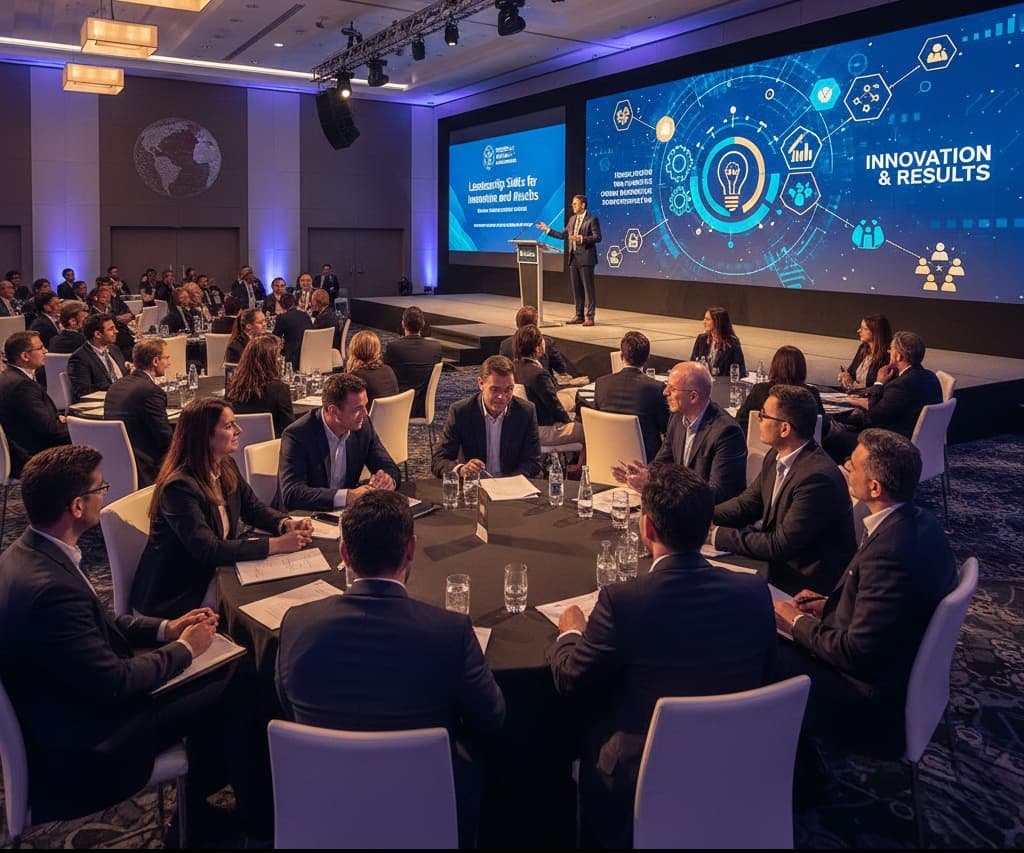
In today’s rapidly evolving business landscape, effective leadership has become the cornerstone of organizational success. As we navigate through 2026, executives and managers across the UAE are increasingly recognizing that traditional management approaches no longer suffice in driving innovation and achieving measurable results.
The ability to lead teams toward creative problem-solving while maintaining focus on tangible outcomes has become a critical competency for professionals at all levels.
Developing Core Leadership Competencies That Drive Innovation
Modern leadership development extends far beyond basic management training. Today’s successful leaders cultivate a unique blend of emotional intelligence, strategic thinking, and adaptive decision-making skills that empower their teams to innovate confidently.
Key competencies include:
- Strategic visioning and long-term planning capabilities: Leaders must articulate compelling visions that inspire teams while establishing clear roadmaps for execution.
- Data-driven decision-making frameworks: Combining analytical rigor with intuitive judgment enables leaders to make informed choices quickly.
- Cross-functional collaboration and team empowerment: Breaking down silos and fostering cooperation across departments accelerates innovation.
- Resilience and change management expertise: Navigating uncertainty and guiding teams through transformation requires emotional stamina and adaptive thinking.
According to research from Harvard Business Review, organizations with strong leadership development programs are 2.4 times more likely to hit their performance targets than those without structured leadership training. This correlation between leadership excellence and business outcomes underscores the importance of continuous skill development.
Creating a Culture of Innovation Through Leadership
Leadership and innovation are intrinsically connected. When executives model innovative thinking and create psychologically safe environments, teams feel empowered to experiment, take calculated risks, and propose unconventional solutions.
Effective innovation-focused leaders establish clear frameworks that balance creative exploration with accountability. They encourage diverse perspectives, welcome constructive failure as a learning opportunity, and allocate resources strategically to support breakthrough initiatives.
Essential practices for innovation-driven leaders:
- Encourage experimentation: Create dedicated time and budget for teams to explore new ideas without fear of punishment for intelligent failures.
- Promote knowledge sharing: Establish regular forums where employees can share insights, learnings, and best practices across the organization.
- Remove bureaucratic obstacles: Streamline approval processes and eliminate unnecessary red tape that slows down innovation cycles.
- Recognize and reward creativity: Publicly celebrate innovative contributions to reinforce the behaviors you want to cultivate.
The most successful leaders in 2026 understand that innovation isn’t just about technology—it’s about fostering a mindset shift across the entire organization. This requires consistent communication, recognition of innovative contributions, and removal of bureaucratic barriers that stifle creativity.
Measuring Leadership Impact on Business Results
Results-oriented leadership requires establishing clear key performance indicators and accountability structures. Modern leaders utilize both quantitative metrics and qualitative feedback to assess their effectiveness and adjust their approaches accordingly.
Essential measurement approaches include:
- Team productivity and efficiency benchmarks: Track output per team member, project completion rates, and time-to-delivery metrics.
- Employee engagement and retention rates: Monitor satisfaction scores, voluntary turnover, and participation in development programs.
- Innovation pipeline metrics: Measure the number of ideas generated, prototypes developed, and successful implementations launched.
- Customer satisfaction and business growth indicators: Analyze net promoter scores, revenue growth, market share expansion, and customer lifetime value.
The McKinsey Global Institute reports that companies with strong leadership practices demonstrate 3.5 times higher revenue growth compared to their competitors. This substantial performance differential highlights why organizations must invest in leadership capability building.
Practical Leadership Strategies for 2026
Contemporary leadership development programs focus on actionable frameworks that professionals can immediately implement within their organizations. These strategies emphasize situational awareness, adaptive communication, and technology-enabled collaboration
Successful leaders in the UAE market are leveraging digital transformation tools to enhance team coordination while maintaining the human-centric approach that drives genuine engagement. They understand that sustainable results emerge from aligning individual motivations with organizational objectives.
Actionable strategies for today’s leaders:
- Implement regular one-on-one coaching sessions: Dedicate time to understand each team member’s aspirations, challenges, and development needs.
- Adopt agile leadership methodologies: Use iterative approaches, rapid feedback loops, and adaptive planning to respond quickly to market changes.
- Invest in continuous learning: Participate in executive education programs, industry conferences, and peer networking groups.
- Leverage technology for collaboration: Utilize project management platforms, communication tools, and analytics dashboards to enhance team effectiveness.
Regular coaching, peer learning networks, and exposure to diverse business challenges help leaders refine their skills and develop the agility needed to navigate uncertainty. Continuous learning has become non-negotiable for executives seeking to maintain competitive advantage.
Frequently Asked Questions
1. What are the most important leadership skills for driving innovation in 2026?
A: Strategic thinking, emotional intelligence, effective communication, adaptability, and creating psychologically safe environments are essential for driving innovation and achieving results.
2. How can leaders measure the ROI of innovation initiatives?
A: Track time-to-market, revenue from new offerings, cost savings, customer adoption rates, and use balanced scorecards combining financial and strategic metrics.
3. What’s the difference between management and leadership in modern organizations?
A: Management executes processes and ensures efficiency, while leadership inspires vision, drives change, and develops people for organizational transformation and growth.
Experience Seamless Executive Transportation with GCC Drive
Whether you’re attending leadership development conferences, meeting with your executive team across Dubai, or traveling to innovation workshops throughout the UAE, GCC Drive ensures you arrive refreshed and ready to perform. Our professional chauffeur services offer sedans, SUVs, and luxury vehicles with experienced drivers who understand the importance of punctuality and comfort for business professionals.
Book your reliable executive transportation today and focus on what matters most—leading your team to innovation and results. Contact GCC Drive for premium chauffeur services across the UAE.
